
Power of 3 — Range Bull / Bear
ICT's classic three-phase day cycle: tight Accumulation → liquidity Manipulation (stop-run) → Distribution in the opposite direction. Day-thesis driver when the accumulation is genuinely tight.
updated 2026-04-28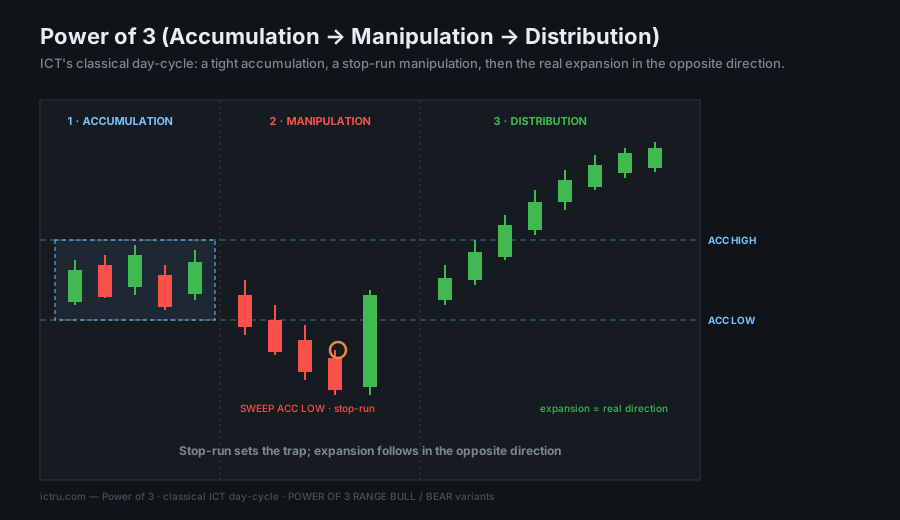
The setup
Power of 3 (PO3) is the cleanest expression of ICT’s day-cycle thesis:
- Accumulation — a tight range forms (typically Asia / early-London)
- Manipulation — one extreme of that range is briefly swept and reclaimed (a stop-run trap)
- Distribution — the real expansion runs in the opposite direction of the manipulation
When all three phases line up, the post-manipulation expansion can run 1.5× the accumulation range or more.
This is the structural cousin of AMD, but PO3 looks for the full three-phase pattern as an explicit signal rather than treating manipulation as a magnet. Concept overview: Power of 3 concept page.
Line ships on our chart HUD as PO RNG BULL / PO RNG BEAR.
Entry rules
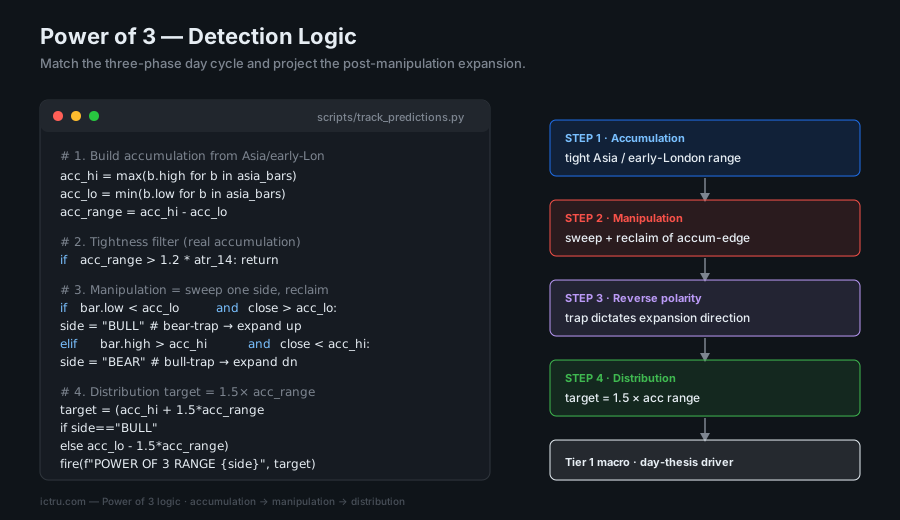
- Build accumulation: Asia + early-London high / low (typically 20:00–04:00 ET)
- Tightness filter:
acc_range < 1.2 × ATR14 - Manipulation: a bar must sweep one extreme AND close back inside the range (the trap)
- Direction: opposite of the manipulation (bear-trap → bull expansion; bull-trap → bear expansion)
- Entry: market on the manipulation-bar close, or limit at the inside-edge of the accum range
- Stop: beyond the manipulation extreme + buffer
- Target:
1.5 × acc_rangepast the opposite accumulation edge
Stats by tightness
| Accumulation range | n | Target-hit rate |
|---|---|---|
| < 0.8 × ATR14 | 220 | 70% |
| 0.8–1.2 × ATR14 | 350 | 60% |
| 1.2–1.6 × ATR14 | 150 | 47% |
Tightness matters a lot. Wide-range accumulations don’t reverse cleanly — they’re often just pre-trend chop, not a real PO3.
Why Tier 1
When the accumulation is tight, the pattern delivers an asymmetric outcome — small risk, big projected target. The single biggest risk is misidentifying the accumulation phase: a wide-range Asia session is rarely a true PO3, and trying to force one usually means trading against the day’s actual bias.
History
- 2026-04-28 — Page created. PO3 is the structural backbone of AMD and informs entry timing on PRELON SWEEP and LON BOTH BULL.